
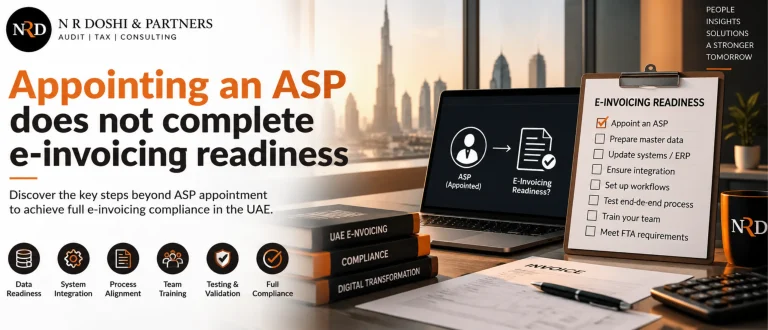
Appointing an ASP does not complete e-invoicing readiness
Why provider selection and enterprise readiness are different decisions For larger UAE businesses, appointing an accredited service provider is an important and time-bound decision. It is also easy to mistake that decision for the programme itself. An ASP can provide connectivity, exchange capability, and important technical services. It cannot, on its own, decide which transactions belong […]
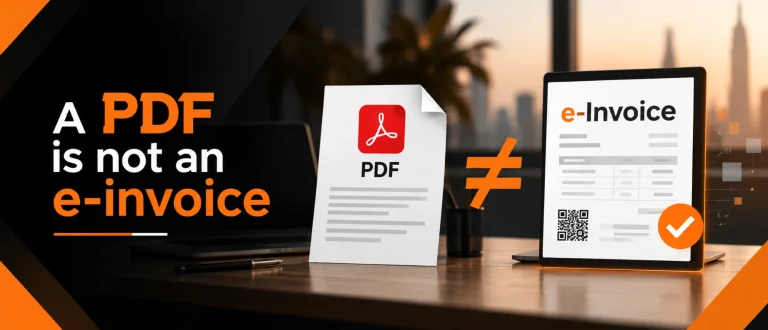
A PDF is not an e-invoice
What UAE finance leaders need to understand before implementation Many organisations already create invoices electronically. They generate a PDF from the ERP, email it to a customer and retain a digital copy. That may be an efficient document process, but it is not the same as e-invoicing under the UAE framework. The distinction matters because it […]

Internal Audit Checklist for UAE Companies: A Practical, Phase-by-Phase Guide
A useful internal audit checklist does two things: it tells you what to check, and it tells you when in the process to check it. Most checklists only do the first. Below is a working checklist organized around the four phases of an actual internal audit – Planning, Fieldwork, Reporting, and Follow-up – so you […]

5 Corporate Tax Filing Mistakes UAE Businesses Are Still Making in 2026
Most UAE businesses filing their second Corporate Tax return assume the hard part is behind them. It isn’t. The mistakes that cause FTA penalties and audit flags in 2026 are rarely new errors – they’re the same assumptions from year one, repeated without a second look. Two things have changed since that first filing, though: […]

Your Tax Returns Are Talking to Each Other: Reconciling VAT and Corporate Tax in the UAE
VAT turnover and Corporate Tax revenue in the UAE do not need to match. They are built from different starting points, for different purposes, under different laws. But when the two numbers diverge, the business needs to be able to explain why – clearly, consistently, and before anyone asks. That requirement is becoming one of the […]

UAE VAT Is Moving into Its Next Phase of Operational Discipline
Cabinet Decision No. 149 of 2026 changes more than technical wording – it affects employee benefits, input tax recovery, composite supplies, healthcare, capital assets, and the way mixed-use VAT will eventually be apportioned. The UAE VAT framework continues to mature. Cabinet Decision No. 149 of 2026 introduces a series of amendments to the VAT Executive Regulations, most […]

The UAE Free Zone Regime Is Moving From Eligibility to Evidence
FTA Decision No. 6 of 2026 raises the compliance bar for distribution businesses in Designated Zones. The UAE’s Free Zone Corporate Tax regime has always depended on meeting specific qualifying conditions. For certain distribution businesses, those conditions are now becoming much more evidentiary. FTA Decision No. 6 of 2026, issued on 2 June 2026 and published on […]

IFRS 18 Will Change More Than the Income Statement
IFRS 18 takes effect for annual reporting periods beginning on or after 1 January 2027, and for UAE companies with a calendar year-end, 2026 is the comparative year. That timeline matters more than the standard’s name suggests, because the real challenge is not the new line items. Rather, it is whether management’s internal performance story […]

VATP046 Explained: What the UAE’s VAT Law Amendments Mean for Your Business
The UAE Federal Tax Authority’s Public Clarification VATP046 confirms six changes to the VAT Law that businesses need to act on now, not just be aware of. Some of these changes have already been in effect since 30 October 2024. Others took effect on 1 January 2026. VATP046 brings both sets of amendments together in […]