

Going Paperless Under Pressure: Complying with the FTA’s Electronic Record-Keeping Rules
FTA Decision No. 4 of 2026 lets UAE businesses keep accounting records as electronic copies. It also attaches conditions. Each copy must be complete, identical to the original, readable on screen and open to the Federal Tax Authority on request. The Decision took effect on 30 July 2026. If your books sit in a cloud platform […]
UAE e-invoicing is a finance control programme
Technology enables the exchange. Controls protect the outcome. E-invoicing is often assigned to technology because systems must connect and structured data must move. That is necessary, but it is not sufficient. The programme changes how an invoice becomes an accounting record, a VAT record, a customer obligation, and auditable evidence. That makes it a finance […]
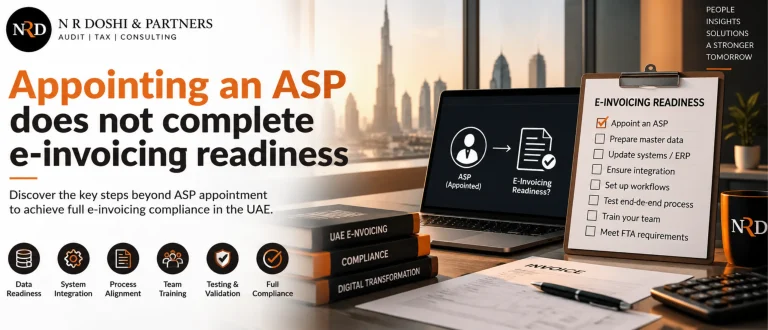
Appointing an ASP does not complete e-invoicing readiness
Why provider selection and enterprise readiness are different decisions For larger UAE businesses, appointing an accredited service provider is an important and time-bound decision. It is also easy to mistake that decision for the programme itself. An ASP can provide connectivity, exchange capability, and important technical services. It cannot, on its own, decide which transactions belong […]
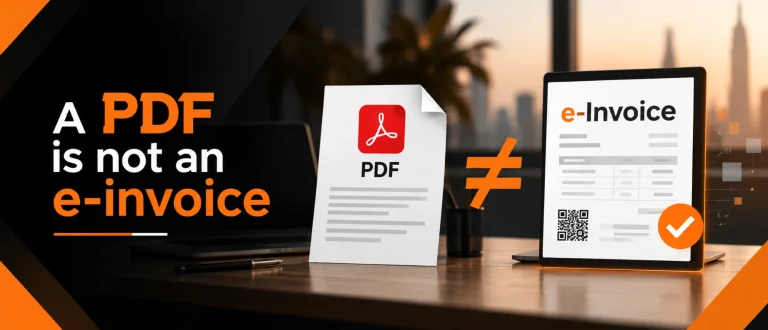
A PDF is not an e-invoice
What UAE finance leaders need to understand before implementation Many organisations already create invoices electronically. They generate a PDF from the ERP, email it to a customer and retain a digital copy. That may be an efficient document process, but it is not the same as e-invoicing under the UAE framework. The distinction matters because it […]
E-Invoicing Guidelines Version 1.1 Clarifies Retention Billing, Advance Payments and Intra-Group Transactions
The UAE Ministry of Finance (MoF) issued Version 1.1 of its Electronic Invoicing Guidelines on 1 June 2026. This marks the first substantive update to the technical rulebook since the framework launched in 2025. The update comes just weeks before the national e-invoicing system opened its voluntary pilot phase on 1 July 2026. Version 1.1 […]
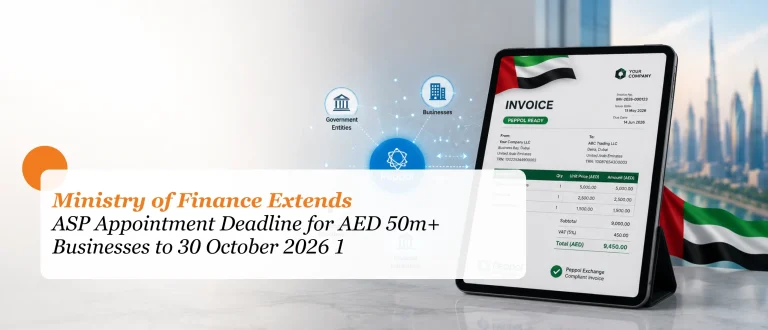
Ministry of Finance Extends ASP Appointment Deadline for AED 50m+ Businesses to 30 October 2026
The UAE Ministry of Finance (MoF) has extended the deadline for large businesses to appoint an Accredited Service Provider (ASP) under the national e-invoicing system, moving the cut-off from 31 July 2026 to 30 October 2026. The three-month extension applies specifically to businesses with annual revenue of AED 50 million (approximately USD 13.61 million) or […]

UAE Launches E‑Invoicing Pilot Phase: Complete Guide for Businesses (2026)
Introduction The United Arab Emirates has officially launched the pilot phase of its national e‑invoicing programme from 1 July 2026. Led by the Ministry of Finance (MoF) and supported by the Federal Tax Authority (FTA), the initiative is part of the UAE’s wider digital economy strategy. The objective is to replace traditional invoice exchange with […]
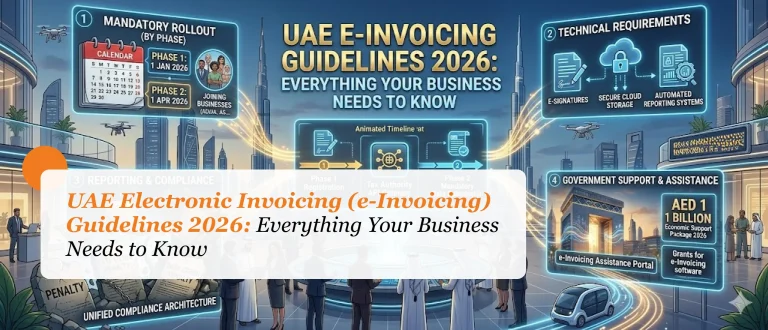
UAE Electronic Invoicing (e-Invoicing) Guidelines 2026: Everything Your Business Needs to Know
The UAE Ministry of Finance has released the updated Electronic Invoicing Guidelines (Version 1.1, dated 01 June 2026) — the most comprehensive policy document yet on the country’s mandatory e-Invoicing rollout. If your business operates anywhere in the UAE, this affects you. Whether you’re a large enterprise with revenues crossing AED 50 million or an […]
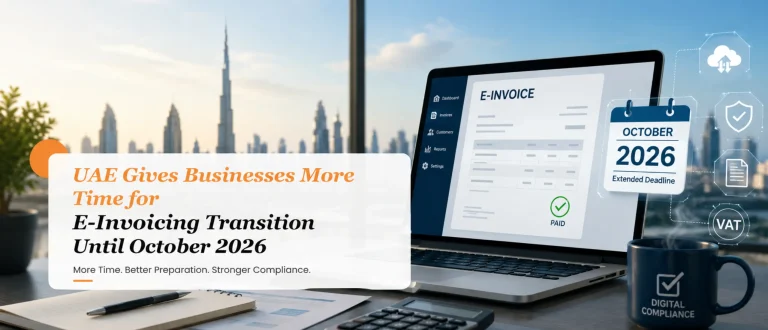
UAE Gives Businesses More Time for E-Invoicing Transition Until October 2026
The United Arab Emirates has officially pushed back an important deadline tied to its upcoming e-invoicing system, giving businesses extra time to prepare for the country’s rapidly evolving digital tax environment. Under the revised timeline, companies now have until October 2026 to finalize partnerships with approved e-invoicing service providers. The extension is expected to […]